
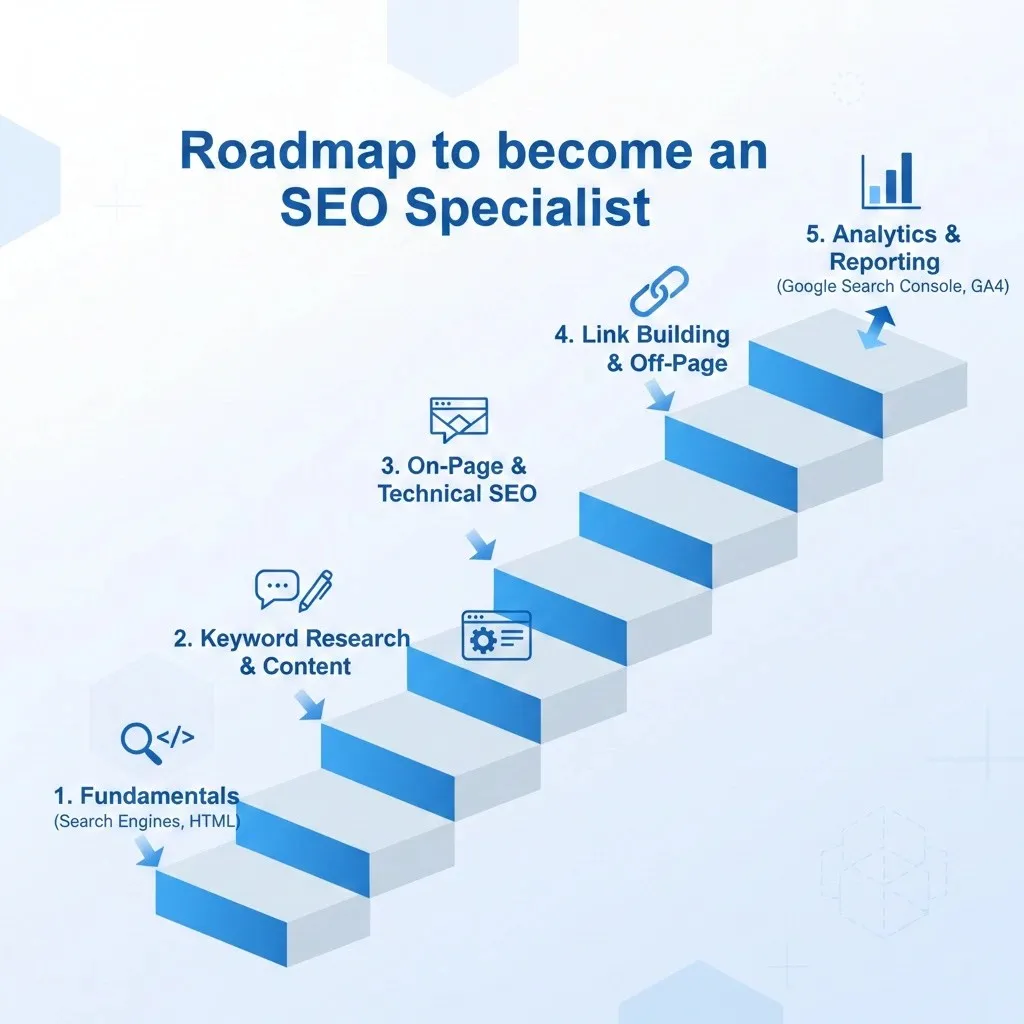
Roadmaps to become an SEO Specialist are essential for anyone who wants to build a successful career in digital marketing. With businesses shifting online, SEO has become one of the most in-demand and future-proof skills. If you are serious about understanding roadmaps to become an SEO Specialist, this guide will give you a clear, structured, and practical path.
This article explains Path to becoming an SEO specialist from beginner to advanced level, including skills, tools, timelines, and career growth opportunities.
What Does an SEO Specialist Do?
Before following SEO specialist roadmap, you must understand the role. An SEO Specialist is responsible for improving website rankings on search engines like Google through organic strategies.
Main responsibilities include:
- Keyword research
- On-page SEO optimization
- Technical SEO improvements
- Content optimization
- Link building
- Performance tracking
Understanding these tasks makes roadmaps to become an SEO Specialist much easier to follow.
Why Choose SEO as a Career?
Many people follow roadmaps to become an SEO Specialist because SEO offers long-term career stability.
Benefits of Becoming an SEO Specialist
- High demand worldwide
- Freelancing and remote opportunities
- Low investment to start
- Scalable income potential
- Continuous learning and growth
SEO is especially valuable for freelancers and digital marketers in competitive regions.
Roadmaps to Become an SEO Specialist (Beginner to Advanced)
Let’s break down roadmaps to become an SEO Specialist step by step.
Step 1: SEO Fundamentals for Aspiring SEO Specialists
The first stage in roadmaps to become an SEO Specialist is understanding the basics.
Focus on:
- How search engines work
- What keywords are
- Difference between on-page, off-page, and technical SEO
- Search intent
At this stage, your goal is clarity, not mastery.
Step 2: Master Keyword Research
Keyword research is the foundation of all roadmaps to become an SEO Specialist. Without keywords, SEO strategies fail.
Learn to:
- Find short-tail and long-tail keywords
- Analyze search intent
- Check keyword difficulty
- Identify low-competition opportunities
Tools commonly used:
- Google Keyword Planner
- Ahrefs
- SEMrush
- Ubersuggest
Strong keyword research skills accelerate roadmaps to become an SEO Specialist.
Step 3: Learn On-Page SEO Deeply
On-page SEO is a core pillar in roadmaps to become an SEO Specialist.
You should master:
- SEO titles and meta descriptions
- Heading structure (H1–H3)
- Internal linking
- Image optimization
- Content optimization
Well-optimized pages improve rankings and user experience.
Step 4: Understand Technical SEO
Technical SEO separates beginners from professionals in roadmaps to become an SEO Specialist.
Focus areas include:
- Website speed optimization
- Mobile-friendliness
- HTTPS and security
- XML sitemaps
- Crawl error fixes
Technical knowledge helps search engines index your site efficiently.
Step 5: Learn Content SEO & Blogging
Content plays a major role in roadmaps to become an SEO Specialist.
Learn how to:
- Write SEO-friendly blogs
- Optimize for readability
- Match search intent
- Use semantic keywords
- Update old content
Google prioritizes helpful, people-first content.
Step 6: Build Off-Page SEO & Backlinks
Off-page SEO is essential in advanced roadmaps to become an SEO Specialist.
Learn:
- White-hat link building
- Guest posting strategies
- Brand mentions
- Digital PR
Backlinks increase authority and trust.
Step 7: Learn Local SEO
Local SEO is a must-have skill in modern roadmaps to become an SEO Specialist, especially for service-based businesses.
Focus on:
- Google Business Profile optimization
- NAP consistency
- Local keywords
- Reviews and ratings
Local SEO skills increase client demand significantly.
Step 8: Learn SEO Tools & Analytics
Tools are critical in professional roadmaps to become an SEO Specialist.
Must-know tools:
- Google Search Console
- Google Analytics
- Ahrefs / SEMrush
- Screaming Frog
- Yoast SEO
Data-driven decisions improve SEO performance.
Step 9: Practice on Real Websites
Practice is the most important step in roadmaps to become an SEO Specialist.
You can:
- Create your own blog
- Offer free SEO for small businesses
- Optimize demo websites
- Track results
Practical experience builds confidence and skills.
Step 10: Build a Portfolio & Personal Brand
A strong portfolio completes roadmaps to become an SEO Specialist.
Include:
- Case studies
- Traffic growth screenshots
- Ranking improvements
- Client testimonials
A personal website increases credibility and trust.
How Long Does It Take to Become an SEO Specialist?
Following proper roadmaps to become an SEO Specialist, timelines usually look like this:
- 1–2 months: SEO basics
- 3–6 months: Practical implementation
- 6–12 months: Professional-level skills
Consistency matters more than speed.
SEO Career Opportunities After Following an SEO Specialist Roadmap
Once you follow SEO specialist roadmap, you can work as:
- SEO Executive
- SEO Specialist
- SEO Consultant
- Freelance SEO Expert
- Digital Marketing Manager
SEO skills are globally transferable.
Is SEO Still a Good Career in 2026?
Yes, SEO specialist roadmap remain relevant in 2026. Google now focuses on:
- Experience
- Expertise
- Authority
- Trust
SEO professionals who adapt to changes continue to succeed.
For official SEO best practices, refer to Google Search Central
Frequently Asked Questions
Are roadmaps to become an SEO Specialist suitable for beginners?
A clear SEO career roadmap helps beginners follow a structured path to become a professional SEO specialist.
Can I become an SEO Specialist without coding?
Yes, basic HTML knowledge helps, but advanced coding is not mandatory.
Is SEO hard to learn?
SEO is easy to start but requires continuous learning and practice.
Final Thoughts
Following structured roadmaps to become an SEO Specialist is the smartest way to build a successful SEO career. SEO rewards patience, consistency, and real value creation. With the right skills and strategy, you can achieve long-term growth and financial freedom.